The SEQDESIGN Procedure

Unified Family Methods

Unified family methods (Kittelson and Emerson 1999) derive boundary values with a specified boundary shape. For example, Pocock’s method (Pocock 1977) derives equal boundary values for all stages in the standardized Z scale. In addition to Pocock’s method, the unified family methods include the O’Brien-Fleming, power family, and unified family triangular methods.

The boundary values at each stage depend on the information fractions

normal upper Pi Subscript k Baseline equals StartFraction upper I Subscript k Baseline Over upper I Subscript upper X Baseline EndFraction

where upper I Subscript k is the information available at stage k and upper I Subscript upper X is the maximum information, the information available at the end of the trial if the trial does not stop early.

Boundary Values in Standardized Z Scale

With the unified family method, the boundary values for the upper alpha boundary upper Z Subscript alpha u, upper beta boundary upper Z Subscript beta u, lower beta boundary upper Z Subscript beta l, and lower alpha boundary upper Z Subscript alpha l, using the standardized normal scale, are given by the following:

  • upper Z Subscript alpha u Baseline left-parenthesis normal upper Pi Subscript k Baseline right-parenthesis equals f Subscript alpha u Baseline left-parenthesis normal upper Pi Subscript k Baseline right-parenthesis upper C Subscript alpha u

  • upper Z Subscript beta u Baseline left-parenthesis normal upper Pi Subscript k Baseline right-parenthesis equals theta Subscript 1 u Baseline upper I Subscript k Superscript one-half Baseline minus f Subscript beta u Baseline left-parenthesis normal upper Pi Subscript k Baseline right-parenthesis upper C Subscript beta u

  • upper Z Subscript beta l Baseline left-parenthesis normal upper Pi Subscript k Baseline right-parenthesis equals theta Subscript 1 l Baseline upper I Subscript k Superscript one-half Baseline plus f Subscript beta l Baseline left-parenthesis normal upper Pi Subscript k Baseline right-parenthesis upper C Subscript beta l

  • upper Z Subscript alpha l Baseline left-parenthesis normal upper Pi Subscript k Baseline right-parenthesis equals minus f Subscript alpha l Baseline left-parenthesis normal upper Pi Subscript k Baseline right-parenthesis upper C Subscript alpha l

where theta Subscript 1 l Baseline left-parenthesis less-than 0 right-parenthesis and theta Subscript 1 u Baseline left-parenthesis greater-than 0 right-parenthesis are the lower and upper alternative references, f Subscript alpha l Baseline left-parenthesis normal upper Pi Subscript k Baseline right-parenthesis, f Subscript beta l Baseline left-parenthesis normal upper Pi Subscript k Baseline right-parenthesis, f Subscript beta u Baseline left-parenthesis normal upper Pi Subscript k Baseline right-parenthesis, and f Subscript alpha u Baseline left-parenthesis normal upper Pi Subscript k Baseline right-parenthesis are the specified shape functions, and upper C Subscript alpha l, upper C Subscript beta l, upper C Subscript beta u, and upper C Subscript alpha u are the critical values derived to achieve the specified alpha and beta levels.

If a derived lower beta boundary value upper Z Subscript beta l Baseline left-parenthesis normal upper Pi Subscript k Baseline right-parenthesis is greater than its corresponding upper beta boundary value upper Z Subscript beta u Baseline left-parenthesis normal upper Pi Subscript k Baseline right-parenthesis, then both values are set to missing.

Note that the drift parameters d Subscript l Baseline equals theta Subscript 1 l Baseline StartRoot upper I Subscript upper X Baseline EndRoot and d Subscript u Baseline equals theta Subscript 1 u Baseline StartRoot upper I Subscript upper X Baseline EndRoot are derived in the SEQDESIGN procedure. The boundary values in standardized Z scale can be derived without specifying the maximum information and alternative reference.

Shape Parameters

The shape function in the SEQDESIGN procedure is given by

f left-parenthesis normal upper Pi Subscript k Baseline right-parenthesis equals f left-parenthesis normal upper Pi Subscript k Baseline semicolon tau comma rho right-parenthesis equals tau normal upper Pi Subscript k Superscript one-half Baseline plus normal upper Pi Subscript k Superscript negative rho Baseline equals normal upper Pi Subscript k Superscript one-half Baseline left-parenthesis tau plus normal upper Pi Subscript k Superscript minus left-parenthesis rho plus one-half right-parenthesis Baseline right-parenthesis

where the parameters rho greater-than-or-equal-to 0 and 0 less-than-or-equal-to tau less-than-or-equal-to 2 rho. can be specified for each boundary separately.

The parameters tau and rho determine the shape of the boundaries. Special cases of the unified family methods also include power family methods and triangular methods. Table 6 summarizes the corresponding parameter values in the unified family for these methods.

Table 6: Parameters in the Unified Family for Various Methods

Unified Family
Method Option Rho Tau
Pocock POC 0 0
O’Brien-Fleming OBF 0.5 0
Power family POW (RHO=rho rho 0
Triangular TRI (TAU=tau) 0.5 tau


Note that the power parameter rho equals 1 slash 2 minus normal upper Delta equals rho Superscript asterisk Baseline minus 1 slash 2, where normal upper Delta is the power parameter used in Jennison and Turnbull (2000) and Wang and Tsiatis (1987) and rho Superscript asterisk is the power parameter used in Kittelson and Emerson (1999).

Also note that instead of the three parameters used in the unified family methods by Kittelson and Emerson (1999), only two parameters are used in the SEQDESIGN procedure. The other parameter is fixed at zero.

Boundary Values in MLE Scale

If the maximum information is available, the boundary values derived from a unified family method can also be displayed in the MLE scale:


  • theta Subscript alpha u Baseline left-parenthesis normal upper Pi Subscript k Baseline right-parenthesis equals upper I Subscript k Superscript negative one-half Baseline f Subscript alpha u Baseline left-parenthesis normal upper Pi Subscript k Baseline right-parenthesis upper C Subscript alpha u

  • theta Subscript beta u Baseline left-parenthesis normal upper Pi Subscript k Baseline right-parenthesis equals theta Subscript 1 u Baseline minus upper I Subscript k Superscript negative one-half Baseline f Subscript beta u Baseline left-parenthesis normal upper Pi Subscript k Baseline right-parenthesis upper C Subscript beta u

  • theta Subscript beta l Baseline left-parenthesis normal upper Pi Subscript k Baseline right-parenthesis equals theta Subscript 1 l Baseline plus upper I Subscript k Superscript negative one-half Baseline f Subscript beta l Baseline left-parenthesis normal upper Pi Subscript k Baseline right-parenthesis upper C Subscript beta l

  • theta Subscript alpha l Baseline left-parenthesis normal upper Pi Subscript k Baseline right-parenthesis equals minus upper I Subscript k Superscript negative one-half Baseline f Subscript alpha l Baseline left-parenthesis normal upper Pi Subscript k Baseline right-parenthesis upper C Subscript alpha l

These MLE scale boundary values are computed by multiplying upper I Subscript k Superscript negative one-half by the standardized Z scale boundary values at stage k.

Boundary Values in Score Scale

If the maximum information is available, the boundary values derived from a unified family method can also be displayed in the score scale:


  • upper S Subscript alpha u Baseline left-parenthesis normal upper Pi Subscript k Baseline right-parenthesis equals upper I Subscript k Superscript one-half Baseline f Subscript alpha u Baseline left-parenthesis normal upper Pi Subscript k Baseline right-parenthesis upper C Subscript alpha u

  • upper S Subscript beta u Baseline left-parenthesis normal upper Pi Subscript k Baseline right-parenthesis equals theta Subscript 1 u Baseline upper I Subscript k Baseline minus upper I Subscript k Superscript one-half Baseline f Subscript beta u Baseline left-parenthesis normal upper Pi Subscript k Baseline right-parenthesis upper C Subscript beta u

  • upper S Subscript beta l Baseline left-parenthesis normal upper Pi Subscript k Baseline right-parenthesis equals theta Subscript 1 l Baseline upper I Subscript k Baseline plus upper I Subscript k Superscript one-half Baseline f Subscript beta l Baseline left-parenthesis normal upper Pi Subscript k Baseline right-parenthesis upper C Subscript beta l

  • upper S Subscript alpha l Baseline left-parenthesis normal upper Pi Subscript k Baseline right-parenthesis equals minus upper I Subscript k Superscript one-half Baseline f Subscript alpha l Baseline left-parenthesis normal upper Pi Subscript k Baseline right-parenthesis upper C Subscript alpha l

These MLE scale boundary values are computed by multiplying upper I Subscript k Superscript one-half by the standardized Z scale boundary values at stage k.

Boundary Values in p-Value Scale

For a design with a lower alternative or a two-sided alternative, the p-value scale boundary values are the cumulative normal distribution function values of the standardized Z boundary values:


  • upper P Subscript alpha u Baseline left-parenthesis normal upper Pi Subscript k Baseline right-parenthesis equals normal upper Phi left-parenthesis upper Z Subscript alpha u Baseline left-parenthesis normal upper Pi Subscript k Baseline right-parenthesis right-parenthesis

  • upper P Subscript beta u Baseline left-parenthesis normal upper Pi Subscript k Baseline right-parenthesis equals normal upper Phi left-parenthesis upper Z Subscript beta u Baseline left-parenthesis normal upper Pi Subscript k Baseline right-parenthesis right-parenthesis

  • upper P Subscript beta l Baseline left-parenthesis normal upper Pi Subscript k Baseline right-parenthesis equals normal upper Phi left-parenthesis upper Z Subscript beta l Baseline left-parenthesis normal upper Pi Subscript k Baseline right-parenthesis right-parenthesis

  • upper P Subscript alpha l Baseline left-parenthesis normal upper Pi Subscript k Baseline right-parenthesis equals normal upper Phi left-parenthesis upper Z Subscript alpha l Baseline left-parenthesis normal upper Pi Subscript k Baseline right-parenthesis right-parenthesis

These nominal p-values are the one-sided fixed-sample p-values under the null hypothesis with a lower alternative.

For a one-sided design with an upper alternative, the p-value scale boundary values are the one-sided fixed-sample p-values under the null hypothesis with an upper alternative:


  • upper P Subscript alpha u Baseline left-parenthesis normal upper Pi Subscript k Baseline right-parenthesis equals 1 minus normal upper Phi left-parenthesis upper Z Subscript alpha u Baseline left-parenthesis normal upper Pi Subscript k Baseline right-parenthesis right-parenthesis

  • upper P Subscript beta u Baseline left-parenthesis normal upper Pi Subscript k Baseline right-parenthesis equals 1 minus normal upper Phi left-parenthesis upper Z Subscript beta u Baseline left-parenthesis normal upper Pi Subscript k Baseline right-parenthesis right-parenthesis

Pocock’s Method

The shape function for Pocock’s method (Pocock 1977) is given by

f left-parenthesis normal upper Pi Subscript k Baseline right-parenthesis equals 1

The resulting boundary values for a two-sided design with an early stopping to reject the null hypothesis upper H 0 colon theta equals 0 are as follows:

  • upper Z Subscript alpha u Baseline left-parenthesis normal upper Pi Subscript k Baseline right-parenthesis equals upper C Subscript alpha u

  • upper Z Subscript alpha l Baseline left-parenthesis normal upper Pi Subscript k Baseline right-parenthesis equals minus upper C Subscript alpha l

That is, the rejection boundary values are constant over all stages of different information levels in the standardized Z scale.

Note that compared with other designs, Pocock’s design tends to stop the trials early with a larger p-value. For a new treatment, Pocock’s design to stop a trial early with a large p-value might not be persuasive enough to make a new treatment widely accepted (Pocock and White 1999). A Pocock design is illustrated in Example 110.3.

O’Brien-Fleming Method

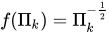
The shape function for the O’Brien-Fleming method (O’Brien and Fleming 1979) is given by
f left-parenthesis normal upper Pi Subscript k Baseline right-parenthesis equals normal upper Pi Subscript k Superscript negative one-half

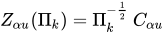
The resulting boundary values for a two-sided design with early stopping to reject the null hypothesis upper H 0 colon theta equals 0 are as follows:

  • upper Z Subscript alpha u Baseline left-parenthesis normal upper Pi Subscript k Baseline right-parenthesis equals normal upper Pi Subscript k Superscript negative one-half Baseline upper C Subscript alpha u

  • upper Z Subscript alpha l Baseline left-parenthesis normal upper Pi Subscript k Baseline right-parenthesis equals minus normal upper Pi Subscript k Superscript negative one-half Baseline upper C Subscript alpha l

That is, the rejection boundaries are inversely proportional to the square root of the information levels in the standardized Z scale.

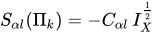
In the score scale, these boundaries can be displayed as follows:
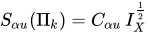
  • upper S Subscript alpha u Baseline left-parenthesis normal upper Pi Subscript k Baseline right-parenthesis equals upper C Subscript alpha u Baseline upper I Subscript upper X Superscript one-half

  • upper S Subscript alpha l Baseline left-parenthesis normal upper Pi Subscript k Baseline right-parenthesis equals minus upper C Subscript alpha l Baseline upper I Subscript upper X Superscript one-half

which are constants over all stages in the score scale. An O’Brien-Fleming design is illustrated in Example 110.2.

Power Family Method

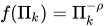
The shape function for a power family method (Wang and Tsiatis 1987; Emerson and Fleming 1989; Pampallona and Tsiatis 1994) is given by
f left-parenthesis normal upper Pi Subscript k Baseline right-parenthesis equals normal upper Pi Subscript k Superscript negative rho

The resulting boundary values for a two-sided design with early stopping to reject the null hypothesis upper H 0 colon theta equals 0 are as follows:

  • upper Z Subscript alpha u Baseline left-parenthesis normal upper Pi Subscript k Baseline right-parenthesis equals normal upper Pi Subscript k Superscript negative rho Baseline upper C Subscript alpha u

  • upper Z Subscript alpha l Baseline left-parenthesis normal upper Pi Subscript k Baseline right-parenthesis equals minus normal upper Pi Subscript k Superscript negative rho Baseline upper C Subscript alpha l

The rejection boundaries depend on the power parameter rho. The power family includes the Pocock and O’Brien-Fleming methods, and the power parameter is used to allow continuous movement between these two methods.

Triangular Method

The shape function for a triangular method (Kittelson and Emerson 1999) in the unified family is given by

f left-parenthesis normal upper Pi Subscript k Baseline right-parenthesis equals normal upper Pi Subscript k Superscript negative one-half Baseline plus tau normal upper Pi Subscript k Superscript one-half

The resulting boundary values for a two-sided design with early stopping to reject the null hypothesis upper H 0 colon theta equals 0 are as follows:

  • upper Z Subscript alpha u Baseline left-parenthesis normal upper Pi Subscript k Baseline right-parenthesis equals left-parenthesis normal upper Pi Subscript k Superscript negative one-half Baseline plus tau normal upper Pi Subscript k Superscript one-half Baseline right-parenthesis upper C Subscript alpha u Baseline equals upper C Subscript alpha u Baseline normal upper Pi Subscript k Superscript negative one-half Baseline left-parenthesis 1 plus tau normal upper Pi Subscript k Baseline right-parenthesis

  • upper Z Subscript alpha l Baseline left-parenthesis normal upper Pi Subscript k Baseline right-parenthesis equals minus left-parenthesis normal upper Pi Subscript k Superscript negative one-half Baseline plus tau normal upper Pi Subscript k Superscript one-half Baseline right-parenthesis upper C Subscript alpha l Baseline equals minus upper C Subscript alpha l Baseline normal upper Pi Subscript k Superscript negative one-half Baseline left-parenthesis 1 plus tau normal upper Pi Subscript k Baseline right-parenthesis

In the score scale, these boundaries are as follows:

  • upper S Subscript alpha u Baseline left-parenthesis normal upper Pi Subscript k Baseline right-parenthesis equals upper C Subscript alpha u Baseline upper I Subscript upper X Superscript one-half Baseline left-parenthesis 1 plus tau normal upper Pi Subscript k Baseline right-parenthesis equals upper C Subscript alpha u Baseline upper I Subscript upper X Superscript one-half Baseline plus upper C Subscript alpha u Baseline tau upper I Subscript upper X Superscript negative one-half Baseline upper I Subscript k

  • upper S Subscript alpha l Baseline left-parenthesis normal upper Pi Subscript k Baseline right-parenthesis equals minus upper C Subscript alpha l Baseline upper I Subscript upper X Superscript one-half Baseline left-parenthesis 1 plus tau normal upper Pi Subscript k Baseline right-parenthesis equals minus upper C Subscript alpha l Baseline upper I Subscript upper X Superscript one-half Baseline minus upper C Subscript alpha l Baseline tau upper I Subscript upper X Superscript negative one-half Baseline upper I Subscript k

Thus, in the score scale, the boundary function is a linear function of the information upper I Subscript k. With these straight-line boundaries, a triangular method for a one-sided trial with early stopping to reject or accept the null hypothesis produces a triangular continuation region. Similarly, for a two-sided design, the continuation region is a union of two separate triangular regions. A triangular method is illustrated in Example 110.6.

Last updated: December 09, 2022